Monday, July 13, 2009

Book Release!


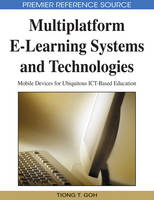
On July 17th the book titled Multiplatform E-Learning Systems and Technologies: Mobile Devices for Ubiquitous ICT-Based Education will be released. The book features the chapter Tools For Students Doing Mobile Fieldwork which is written by Mattias Rost, and Lars Erik Holmquist.

Here's the abstract of the chapter:

Students are not always sitting at their desk when learning new things – they are also out in the world. We present a set of tools we developed to support groups of students who are doing field studies. Initially, we gave the students a wiki for gathering field notes and their group work material. Based on observations on how they used it and collaborated, we developed additional tools to run along with the wiki. These include a mobile application for capturing data (photo, video, audio, and text) and automatically uploading to the wiki, and a set of web tools which run on top of the wiki for increasing the awareness between students, and for browsing the captured data. We describe the implementation of these tools and report on the experience from having students using them on their own equipment during the course.

You may order the book here.

Thursday, June 25, 2009

Tangible and Embodied Interaction @ Liseberg

FAL had an internal conference in Göteborg this Tuesday, which we spent at the Lindholmen area, where the Viktoria Institute is located. In the evening, we visited the Liseberg amusement park to experience some intense interactions...

Friday, June 12, 2009

Today two of our B.Sc thesis students - Johan Sundin and Victor Luque successfully presented their project entitled "Autonomous RFID Robot With Behavior Combination". This is part of the ongoing ActDresses project where we currently are implementing research prototypes to demonstrate how dressing things up and accessorizing can be thought of as a way for doing tangible programming. The robot is built from scratch and features omni-directional wheels, a rotating IR-detector and an RFID-reader that can read multiple tags simultaneously.

Wednesday, June 10, 2009

Push!Music on Video

Push!Music is a mobile music sharing application that uses ad-hoc wireless networking to allow co-located people to share music between each other. This can be done in two ways. First, songs can autonomously copy and send themselves to another player based on similar music listening histories. Second, users can personally recommend songs to others simply by sending them. The Push!Music project was part of the European Union project ECAgents, and has been covered in e.g. a demonstration at UbiComp 2005, and a paper at ECSCW 2007.

Watch the video below where Maria Håkansson and Mattias Rost demonstrates Push!Music!

Tuesday, June 9, 2009

New Video: Push!Photo

Push!Photo is a mobile photo sharing application. It runs on wireless handheld computers, and photos can be made public and immediately accessed by anyone nearby. The application also automatically searches for photos on nearby devices to find interesting and relevant photos based on the context and history of the users. Push!Photo shows how it is possible to share digital photos in a mobile setting just as easily as paper photos. The Push!Photo project was part of the European Union project ECAgents. It was first demonstrated at UbiComp 2006.

Below, watch as Mattias Rost gives a demonstration of Push!Photo!

Friday, May 29, 2009

Mattias and Ylva visited KTH on the 26th of May for a presentation of Nao - a small humanoid robot developed by a french company - Aldebaran Robotics. Nao will for instance replace Sony's canine robot Aibo as a standard platform for RoboCup and is at the same time very open source oriented. Also - if you order four of them, you get the fifth for free!

Monday, May 25, 2009

Working and Living with Robots


Ylva and Mattias participated in a two days workshop at ABB in Oslo, May 14-15.
Apart from learning a lot about different kinds of robots, we also presented some of the results in LIREC, had a full day of brainstorming on novel interaction styles, and tried out two ways of programming industrial robots (during which Mattias managed to prove the fundamental difference between simulation and reality...). Very fun!